Weaponised Psychology: Breaking a Trauma Bond with Radical No-Contact
There is a unique, subtle horror that unfolds when an emotionally abusive partner tries to dismantle your reality by using the very tools you use to help others. As a life coach, I am trained to spot toxic dynamics, understand behavioural patterns, and guide clients toward psychological safety. Yet, knowing the theory does not make you immune to the chemical cage of a trauma bond. In fact, highly empathetic and self-aware individuals are often precisely targeted by emotional abusers.
When a short, intense two-to-three-month relationship ended in my life last September, I found myself facing the ultimate test of my own boundaries. It was a chapter that taught me that sometimes, the ultimate act of self-care is not soft; it is fierce, digital, and absolute.
The Myth of the “Crazy Ex”: Decoding Gaslighting
During our final telephone conversation, when I requested the return of my house key, his immediate response was an exercise in power and control: “I will return it only if you ask me nicely.” But the psychological manipulation escalated further.
He claimed that he had visited a forensic psychologist—or a psychiatrist, he couldn’t even distinguish between the two—who, based solely on his one-sided descriptions, allegedly diagnosed me with a psychiatric illness. The “proof” of my insanity? The simple, human fact that I cried when the relationship broke down.
In the field of emotional abuse, this tactic is known as weaponised psychology. It is a desperate, calculated form of gaslighting designed to make a professional woman question her own sanity, her professional credibility, and her inner compass. By projecting a fabricated clinical diagnosis onto me, he attempted to shift the blame entirely, transforming his emotional abuse into my imaginary pathology.
In that exact split second, my coaching brain took over. I refused to engage in the theatre of his projections. I hung up the phone mid-sentence without saying goodbye.
The Blueprint of Radical Containment
Understanding the biological nature of a trauma bond means acknowledging that your brain can crave the abuser like a drug, even when your intellect knows he is dangerous. To protect myself from ever giving in, I implemented a strategy of radical containment.
I didn’t just block his phone number. I systematically blocked his profile across every single social media platform. Furthermore, I extended this digital fortress to his children, his ex-wife, his previous girlfriend, and his business partner. When cutting off a highly manipulative person, you cannot leave a single window open. You must block the entire solar system surrounding them.
Even when my call logs revealed that his blocked number was desperately trying to reach me that very evening, I remained unyielding. I didn’t feed the addiction.
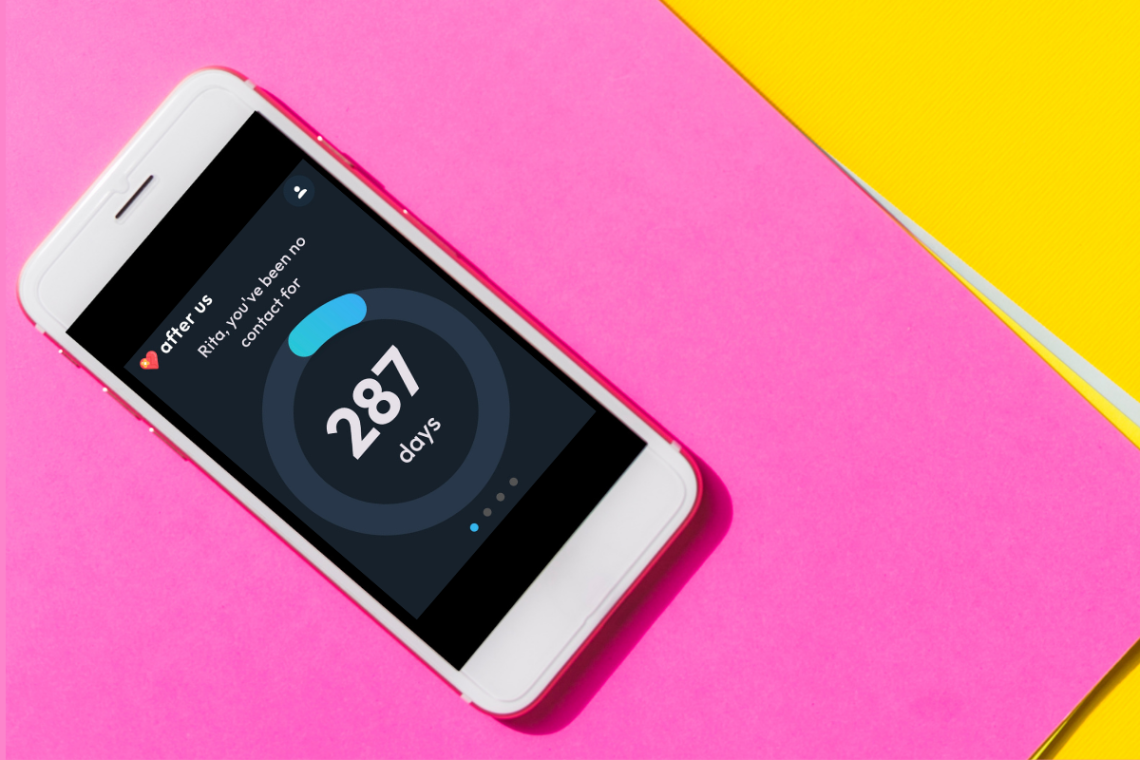
To anchor my decision in daily reality, I downloaded a specialised emotional recovery application called AfterUs. During the initial, most fragile weeks, I utilised its premium journaling features to vent my rawest thoughts and receive objective emotional releases. Today, months later, I still use the free version. Seeing that the no-contact streak counter rises day after day is a magnificent, visual testament to my autonomy. It is the scoreboard of my freedom.
The Hidden Mechanics of “Hoovering”
Abusers rarely accept boundaries easily. They perform what psychologists call hoovering—attempting to suck you back into the toxic dynamic by any means necessary, often using indirect networks or “proxy hoovering” to disturb your environment.
Last December, I crossed paths with him unexpectedly at a local supermarket. He was with another woman and, thankfully, we did not exchange greetings. However, the energetic ripple effect of that encounter was immediate. Within days, his youngest daughter suddenly began scrutinising my TikTok account—forcing me to block her there, just as I had on Facebook.
Then, the manipulation entered my financial and domestic life. He happened to know the independent general contractor who had built my house—a man who had left several unfinished defects on the building and had been completely ignoring my messages since April. Remarkably, the very week after my ex saw me in the supermarket, this contractor suddenly called me out of the blue, acting desperate to discuss fixing the defects.
As a coach, I saw the invisible threads instantly. This sudden change of heart wasn’t professional guilt; it was a chess move orchestrated in the background to test my reactivity. The moment the contractor finished the telephone conversation, indicating he would fix the mistakes, I didn’t wait for him to become a bridge for my ex. I drew a line and blocked the contractor immediately as well. My peace of mind was worth more than his unfinished work.
The tests continued in secret. On Christmas Eve, whilst performing a routine digital cleanup of my phone, I discovered an email from his corporate account sitting in my Spam folder. He wished me a Merry Christmas, but the core of the message was a masterclass in blame-shifting. He claimed he only behaved the way he did because his previous ex-girlfriend had “confused his mind.” There was no accountability, no genuine apology. He was simply hiding behind a scapegoat. I deleted it without a word.
At the end of May, on my name day, another email arrived in the Spam folder. It read simply: “Happy Name Day”—without a single punctuation mark at the end. A lazy, bare-minimum attempt to see if the door was still open. I deleted that one too.
287 Days of Sovereignty
According to my After Us app, as I write this, I have officially maintained my no-contact streak for 287 days.
If you are a professional, empathetic woman currently trapped in a toxic cycle or carrying the guilt of a trauma bond, you must internalise these strict rules:
- Crying is Not a Diagnosis: Shedding tears over the ending of a relationship is a healthy, biological sign of empathy and grief. Do not let a manipulator pathologise your basic humanity.
- No-Contact Means Zero Exposure and Zero Access: Do not check their social media. Do not ask mutual friends about them. Do not read their spam emails out of curiosity. Every micro-exposure resets the addiction clock in your brain.
- Silence is Your Loudest Answer: Manipulators feed on your reactions—whether it is anger, tears, or forgiveness. When you delete their messages and block their flying monkeys without a response, you deprive them of control.
When you refuse to accept a toxic script, the abuser will always try to paint you as the villain of the story. Let them. Your peace of mind is worth their confusion. Today, looking at my no-contact counter, I don’t see days spent in isolation—I see 287 days spent in absolute, unbroken sovereignty.


You May Also Like

How to overcome transgenerational trauma

How to heal your mother wound